English - USA & Canada (USD)
 English - Non EU-country (USD)
 Dansk (EUR)
 Deutsch (EUR)
 Español (EUR)
 Français (EUR)
 Italiano (EUR)
 Nederlands (EUR)
 Norsk (EUR)
 Polski (EUR)
 Suomi (EUR)
 Svenska (SEK)





Step motors – high precision and controlled movement
Step motors are motors that move in defined steps and provide exact positioning as well as repeatable motion without the need for feedback in many applications. The technology enables stable operation, high accuracy, and safe control. The range includes models from smaller compact sizes to more powerful motors with high torque. Depending on the design, step motors can be delivered with planetary gear, gear reducer, or worm gear, as well as with encoder or integrated driver. Step motors can also be customized if needed, such as in terms of cabling, connectors, and mechanical interfaces. Please feel free to contact us for further information.
Motor function and basic characteristics – step motors
Step motors work by activating electromagnetic coils in sequence to create stepwise rotation. This provides exact control over both speed and position, while the motors offer stable operation and high repeatability. These characteristics make step motors ideal for applications that require precision, controllability, and reliability, such as 3D printers, automation equipment, medical technology, laboratory instruments, and valve control.
- Exact positioning and repeatable motion
- Available in several sizes and torque levels
- Driver voltages tailored to motor and driver types
- Possibility of microstepping for smooth and quiet operation
Gear options and performance for step motors
By combining step motors with various gears, torque, speed, and dynamics can be optimized for specific needs. Planetary gears offer high torque density and compact design, gear reducers are robust and cost-effective, while worm gears provide quiet operation and high gear ratios. Together, this makes step motors flexible for many applications with requirements for both precision and strength.
- Planetary gears – high torque capacity and compact design
- Gear reducers – robust and cost-effective
- Worm gears – quiet operation and high gear ratios
Performance varies depending on the motor series, but typical values range between approximately 0.02–28 mNm and a wide range of step frequencies.
Customizations & connections for step motors
Step motors can be customized both mechanically and electrically to fit specific applications. Custom shafts ensure correct mounting, while customized cabling, connectors, or sensors provide optimal control and integration. Encoders can be used when feedback control is needed for extra precision. If necessary, special windings or solutions for reduced resonance can also be offered.
- Custom shaft dimensions
- Customized cable connections & connectors
- Choice of encoder for precise positioning
- Special customized electrical configuration if needed
FAQ – Frequently asked questions about step motors
What is a step motor?
A step motor is a motor that moves in defined steps and provides exact control over
position and movement by controlling electromagnetic coils.
Are step motors quieter?
Step motors can be very quiet, especially in microstepping operation which reduces vibrations
and provides a smoother operation.
How is a step motor controlled?
With a driver that activates the coils in sequence, such as in full steps, half steps, or
microsteps for higher resolution.
What factors affect lifespan?
Load, temperature, step frequency, mechanical mounting, as well as the quality of the driver
and bearings affect lifespan.
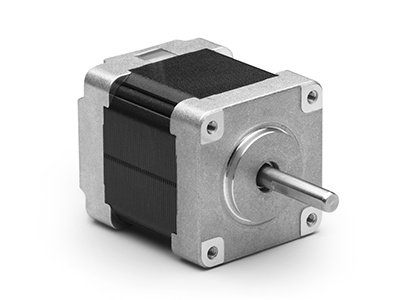
Stepping motors stepping angle 0.9 degrees Cable
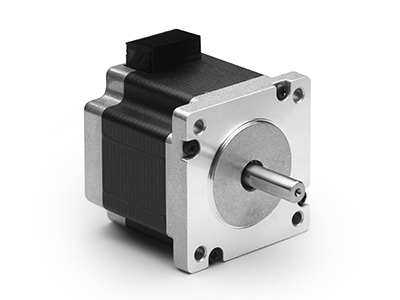
Stepping motors stepping angle 1.8 degrees Connector
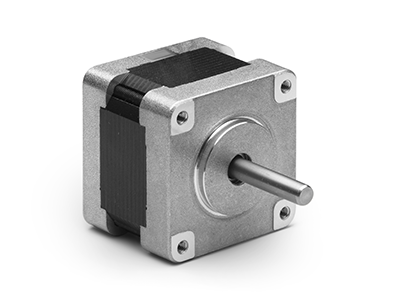
Stepping motors stepping angle 1.8 degrees Cable
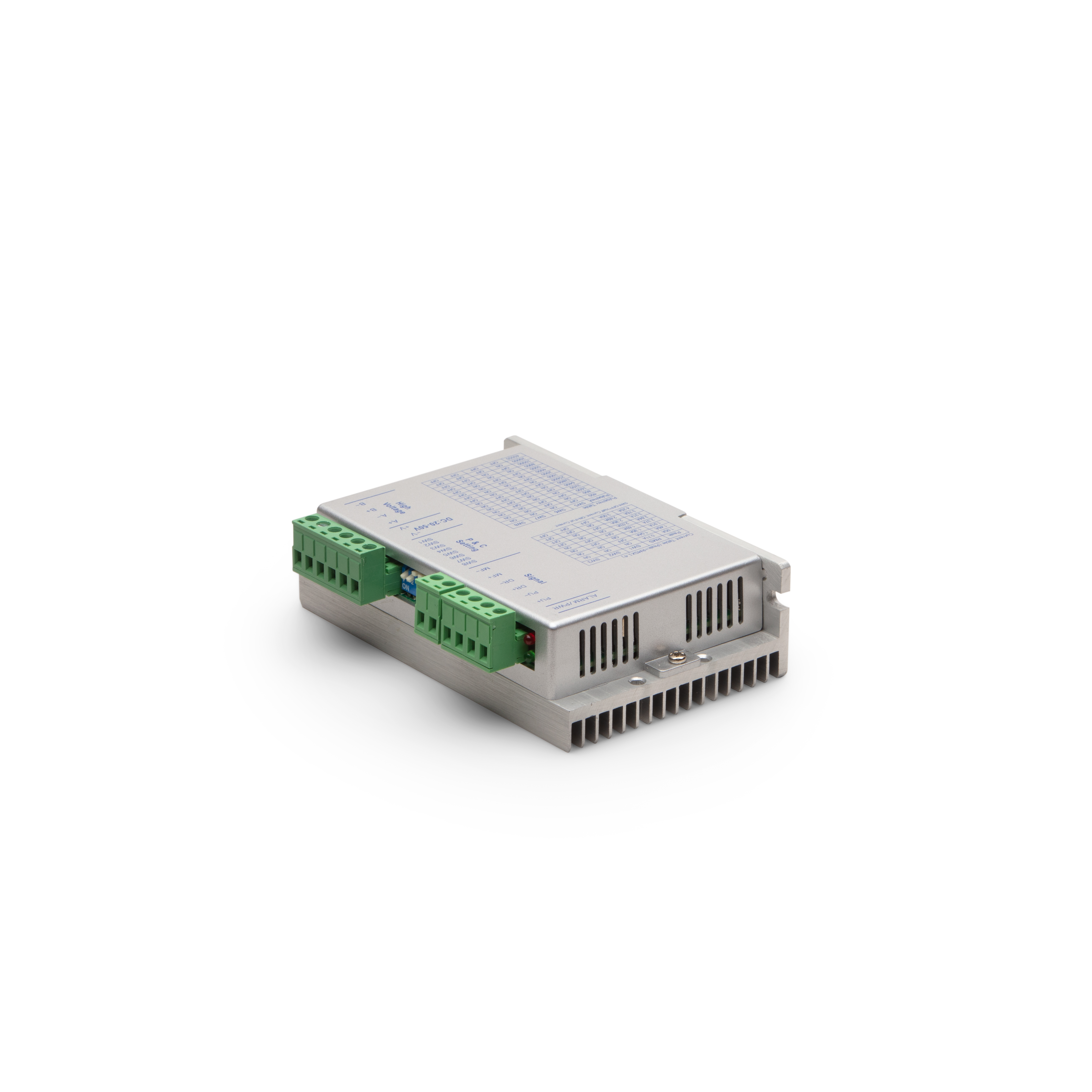
Stepping motor drivers
| Product | Sample price | Stock |
|---|